Root Canal Treatment
Relieve discomfort, eliminate infection, and save your natural tooth.
What Is a Root Canal?
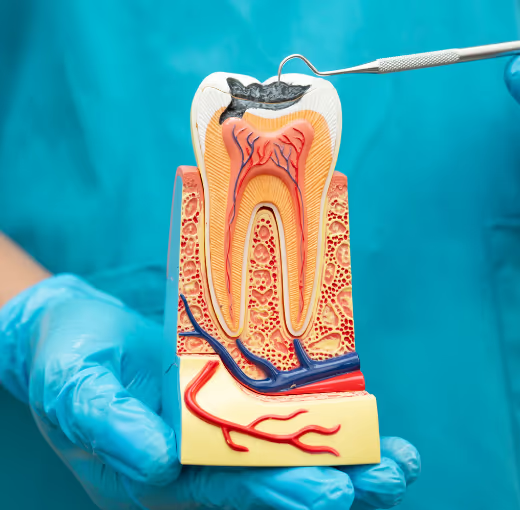
Persistent tooth pain or sensitivity can be stressful. Root canal treatment removes infected or inflamed pulp from inside the tooth, cleans and seals the canals, and restores the tooth so you can keep it — rather than losing it to extraction.
Dr. Aman Sidhu, who graduated with honors from the USC School of Dentistry, performs root canal therapy with a gentle touch. Most patients say it feels no different than getting a routine filling.
Signs You May Need a Root Canal
- Persistent or throbbing tooth pain
- Pain when chewing or sensitivity to hot and cold
- Tender, swollen gums near the tooth
- Tooth discoloration or darkening
- A small pimple or bump on the gums
What to Expect During Treatment
A straightforward, comfortable procedure designed to save your tooth.
Numb the Area
Local anesthesia is administered so you feel comfortable throughout the procedure.
Create an Opening
A small access opening is made to reach the infected pulp inside the tooth.
Remove Infected Pulp
Damaged pulp, nerve tissue, and bacteria are carefully removed from the canals.
Clean & Shape
The canals are thoroughly cleaned, disinfected, and shaped to receive a filling.
Fill & Seal
The interior of the tooth is filled and sealed to prevent future infection.
Restore the Tooth
A crown is typically placed to restore strength, function, and a natural appearance.
Frequently Asked Questions
Is a root canal painful?
No. With modern anesthesia, treatment feels similar to receiving a filling. We also offer comfort options for anxious patients.
Is a root canal the same as a filling?
No. Fillings address surface decay, while a root canal removes damaged pulp and nerve tissue from inside the tooth.
Is there an alternative to a root canal?
The main alternative is extraction, which typically requires replacement with an implant or bridge — often a more involved and costly option.
What happens if I delay treatment?
The infection will worsen, potentially causing increased pain, swelling, or an abscess. Prompt treatment is always easier than delayed treatment.
Can a root canal fail?
Root canals have a very high success rate. In the rare case infection returns, retreatment can often save the tooth.
Don't Wait Out Tooth Pain
The sooner we treat an infected tooth, the better your chances of saving it. Schedule your visit today.
Book an Appointment